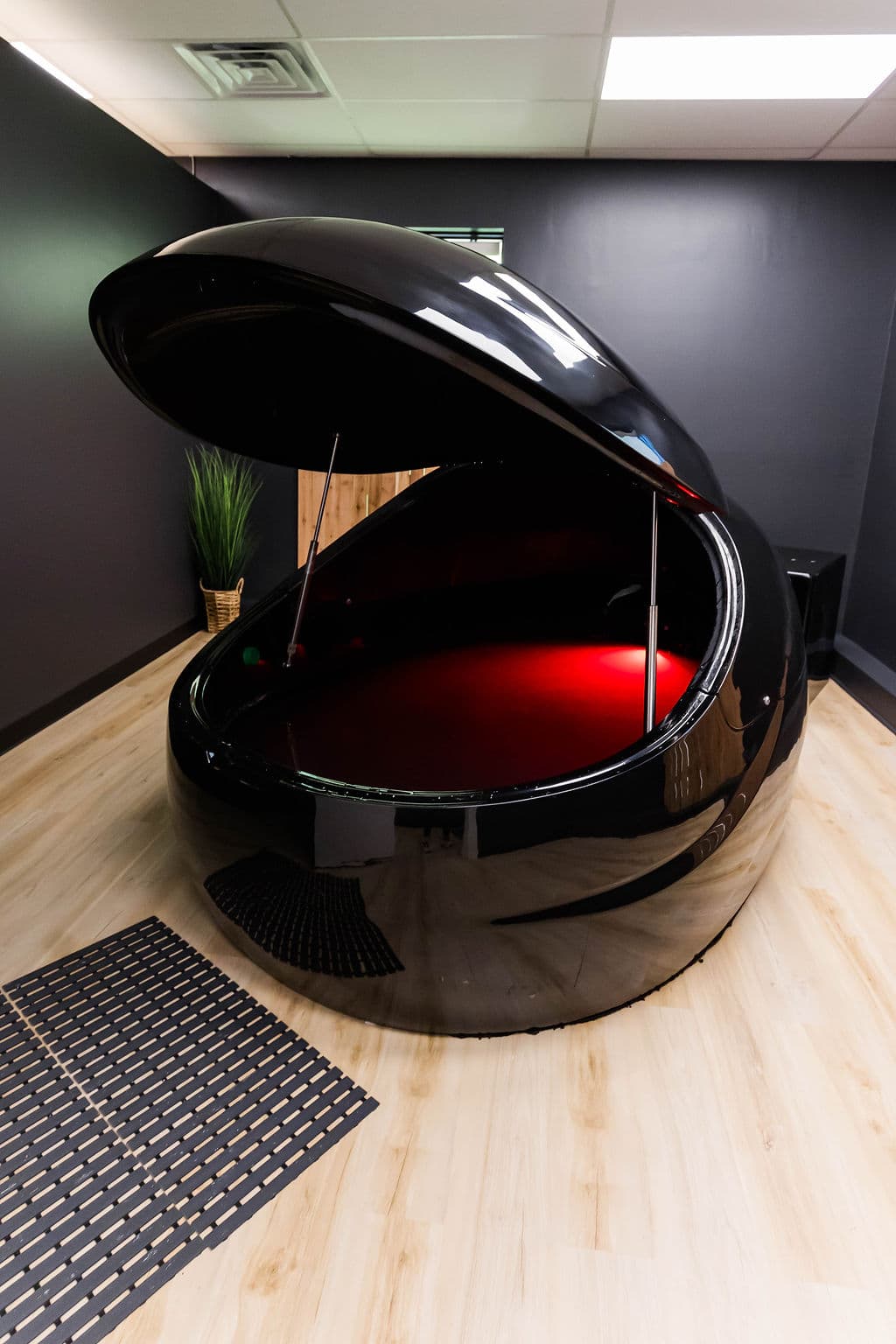
You booked a float session. Now what?
Most people have the same three questions: What does it feel like? What do I bring? Am I going to freak out?
Fair questions. Float therapy is one of those things that sounds strange until you try it — and then you wonder why you waited so long. Here's everything you need to know before your first session, straight from the people who float every week.
1. You Won't Sink
This is the number one concern, and it's the easiest to address. The tank holds over 1,000 lbs of Epsom salt dissolved in about 10 inches of body-temperature water (93.5°F). The salt concentration is so high that your body floats effortlessly on the surface — like the Dead Sea, but warmer and quieter.
You don't need to know how to swim. You don't need to do anything. Just lie back and the water holds you. It's physically impossible to sink.
2. You Control the Experience
Worried about feeling trapped? Don't be. You're in charge the entire time.
The door doesn't lock — you can open it whenever you want. Most first-timers start with the interior light on and the door cracked open a few inches. That's completely fine. There's no "right way" to float. Some people never close the door and still have an incredible session.
As you get comfortable, you can work toward full darkness and silence — which is where the deepest theta brainwave states happen. But there's zero pressure to get there on your first visit.
3. Don't Shave, Skip the Coffee
Two practical tips that will save you some discomfort:
Don't shave or wax within 24 hours. The salt concentration that makes floating so effortless will sting any fresh cuts, razor burn, or waxed skin. Give yourself a day.
Skip the caffeine beforehand. You want your nervous system calm, not wired. A cup of coffee before floating is like trying to meditate after a double espresso — it works against you. If you're an afternoon floater, just hold off on the second cup.
4. The First 10 Minutes Are the Hardest
Here's what nobody tells you: the beginning is the noisiest part.
Your brain isn't used to zero input. For the first 5-10 minutes, you'll adjust your position, notice the silence, wonder if you're doing it right, think about your to-do list, and generally feel restless. That's completely normal.
Then, somewhere around minute 10-15, something shifts. Your heart rate drops. Your breathing slows. The mental chatter fades. Your muscles release tension you didn't know you were carrying.
This is the state that float veterans chase — a kind of deep, conscious relaxation that's almost impossible to reach any other way. It's similar to the state between waking and sleep, except you're fully aware. Many people report creative breakthroughs, emotional release, or simply the deepest rest they've felt in months.
This is also why 60-minute sessions are the minimum we recommend. You need time to get past the adjustment period and into the good stuff.
5. You'll Feel It for Hours After
The benefits don't stop when you step out of the tank.
Most people describe a post-float glow: colors look brighter, sounds are clearer, and there's a calm alertness that lasts for hours. Muscle tension and joint pain noticeably decrease. Sleep that night is almost always deeper.
The Epsom salt (magnesium sulfate) plays a role here too — magnesium absorbs through your skin during the session, which helps with muscle recovery, reduces inflammation, and promotes better sleep. It's one of the reasons athletes and recovery-focused people love floating.
Some regular floaters describe it as "resetting the nervous system." After a week of stress, screens, noise, and stimulation, an hour of zero input lets everything recalibrate.
What to Bring
Just yourself. We provide towels, earplugs, and shower facilities. Wear whatever you're comfortable in — most people float without a suit for the best experience, but it's entirely your call.
Remove contact lenses before your session. Everything else, we've got covered.
What It Costs
Float sessions at Debrief are booked through the Private Suite — $69/hr, or $49/hr for members. The suite also includes a private sauna and cold plunge, so you can combine modalities in one visit.
Ready to Try It?
The hardest part is booking. Everything after that is effortless — literally.
Debrief Recovery is located at 55 Boston Providence Hwy, Norwood, MA 02062 — behind the Valvoline in the Rojo Office Park. Open Tue-Fri 8AM-7PM, Sat-Sun 10AM-6PM.